
An innovative beverage format serves as a reminder that you learn more from your mistakes, even if that costs you your business. More…
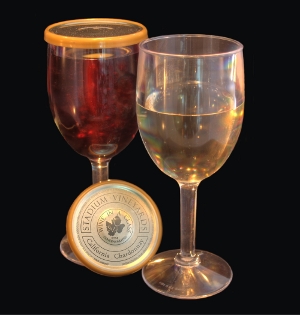
I was tipped off about a month ago to a story in an email from someone unconnected with the lead that he provided. He was simply a reader who “used to be in the wine business and still searches for new trends, as a hobby.”
He thought I may be interested in a new kind of package, one that he described as “Wine in a disposable, or take-home souvenir, PET glass [that] looks like a promising package and opens an entire new market that until now was served exclusively by beer and soft drinks.”
I was.
His tip led me to speak with Bill Murray, president and CEO of Stadium Vineyards, St. Louis. I quickly found out that, coincidentally, Murray had a major connection with Food & Beverage Packaging. In 1989, his concept for a single-serve glass of wine earned Package of the Year honors in the beverage category from Food & Drug Packaging magazine (as we were then known).
That honor was a high-water mark for his venture, which soon thereafter flamed out. Murray’s story is one of disappointment and failure (albeit temporary), but also of lessons learned and a comeback centering on the resurrection of a concept that he believed in, but that had already failed once. It was apparent that Murray possesses the heart and conviction of an entrepreneur.
The initial project misfired due to a key vendor who skipped the crucial polyethylene terephthalate (PET) single-serve prototype portion of the package development process. The containers caused problems that couldn’t be fixed, which halted production and put Murray’s company out of business and led to a lengthy lawsuit. Murray moved on, but the idea stayed with him.
Twenty years later, Murray is emerging from retirement and relaunching the concept.
“I decided to take another crack at this product, upgrade the glass, do our own tooling and make sure those problems that initially occurred don’t occur again,” he told me. Murray expects the new Wine by the Glass to be commercial in a few months.
One thing that’s changed is that he’s positioning the 187-milliliter glass of wine as a standalone unit for concession sale rather than the previous four-pack retail unit. “That’s a ton of business” he says of stadium sales. He also expects buy-in for concert venues.
Murray increased the glass’s height from five inches to seven because he is no longer confined to a format that would fit into airlines’ serving carts. The revision mimics a traditional restaurant wine glass.
Also, the new design replaces the hollow stem with a solid one that provides further rigidity and makes an empty glass reusable rather than disposable. The thick-walled glass-six times thicker than typical PET containers--provides the needed eight to 12 months’ shelf life. It also imparts a classy image and makes the glass virtually unbreakable.
Murray is also eliminating a label on the glass: The vacuum-seal cap will carry branding and information required by the Bureau of Alcohol, Tobacco, and Firearms (ATF). This enhances its reuse, he suggests, noting that the ATF requires an aggressive adhesive for such a label that frustrates its removal.
And in another crucial change as a final lesson learned, Murray is relying on a local die-maker and molder rather than an overseas vendor.
If things go according to plan, by fall Murray and sports fans at select venues can toast the endeavor with a single glass of wine multiplied by the thousands.
I hope that Murray will enjoy a second glass of wine that’s far better than the first. I think we can all toast his perseverance.

Recent Comments
Custom Boxes
You are right, this is very important before...
You can find many inspiration from Instagram app...
Check out Honista app
Great Article!